Take Small Steps
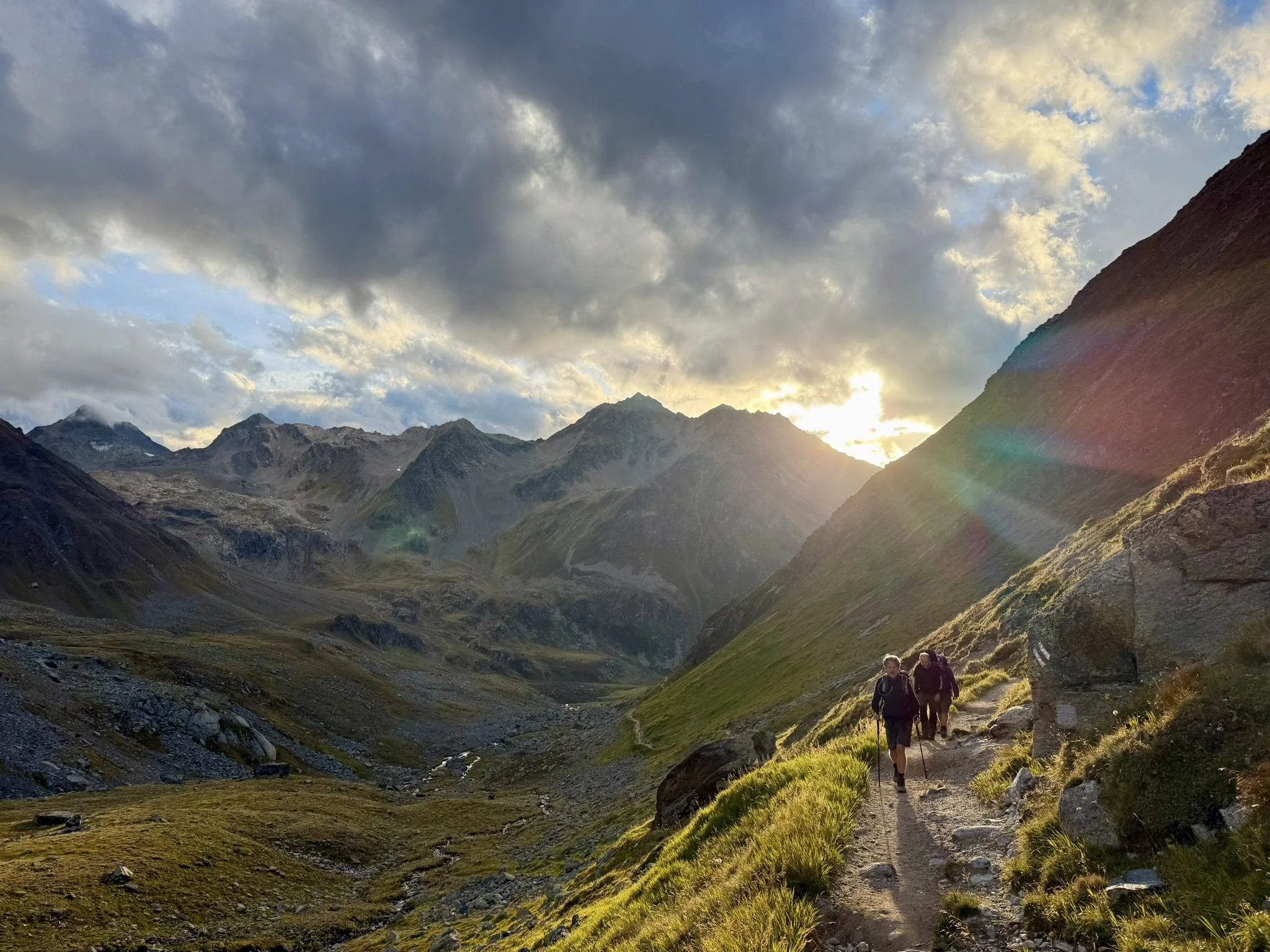
What four days in the Swiss mountains reminded me about support, community, and taking small steps.
I didn't think I was a wilderness hiking person.
This may be surprising given that I’ve been a Girl Scout leader for years. But I like daily showers. Comfortable beds. Clean hair.
Even when I worked remotely through most of the pandemic, I was generally ready to walk out the door and go to the office at any moment. Full face of makeup. Hair washed. Pants with actual zippers.
So while I have plenty of experience in the outdoors—and even backpacked and wilderness camped as a Girl Scout myself—I had pretty happily moved on.
And yet, somehow, earlier this year I said yes to a four-day, three-night hut-to-hut hiking trip through the Swiss mountains.
There may have been a couple of cocktails involved when my husband and I found a good deal on flights and decided to pull the trigger.
Whatever it was, I’m very glad we did.
There were 19 of us in total. Eighteen from Denmark, plus me.
We were set to meet in Zurich to travel by bus to our starting point near Davos, though we weren’t getting the smooth start we’d anticipated. That morning, the main flight carrying much of the group from Copenhagen had been canceled. Flights had to be rebooked. Transportation changed. Our first hiking day was condensed, leaving us with a shorter—and considerably steeper—route to reach the first mountain hut before dark.
Somehow, everyone got there.
I assumed most of the group knew one another, but as we went around introducing ourselves on the bus, I realized many people were relatively new to the group. My husband and I weren’t the only ones who knew just a handful of people. For us, the familiar faces included his two older brothers and my sister-in-law, who was also one of the trip organizers. I was also reconnecting with a former colleague I hadn’t seen in more than 10 years.
We had each been asked to bring something for the group: a game, treat, song, skit, or other form of entertainment. There were chocolates and dried fruit. Songs for the trail. And a little something for a toast at the summit.
I brought an experiment.
After the introductions, everyone drew another person’s name from a hat. That person became theirs to quietly encourage throughout the trip.
I called it the Secret Cheerleader.
The goal was to give your person a little extra encouragement without making it obvious that you had drawn their name—which meant, of course, that you needed to encourage other people too.
There were quite a few comments about how decidedly un-Danish this assignment was.
But something interesting happened.
By the time we revealed the names at the end of the trip, many people couldn’t figure out who their Secret Cheerleader had been.
They’d received encouragement from too many people.
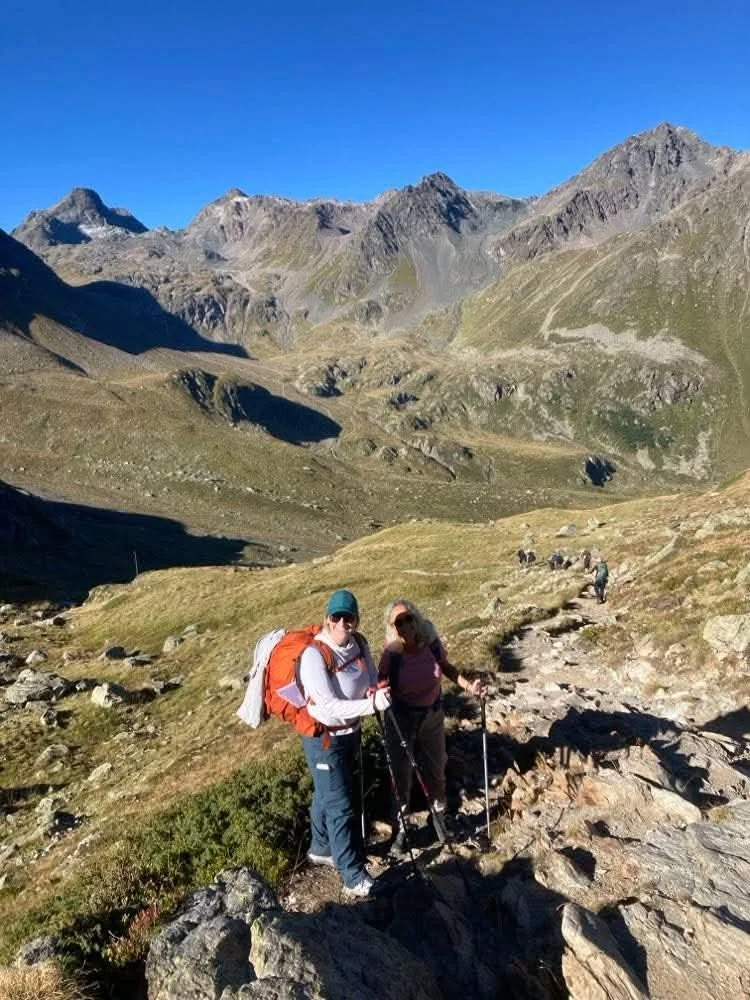
The second day was hard for me.
We had an ascent of almost 2,000 feet (600 meters), much of it toward the end of the day.
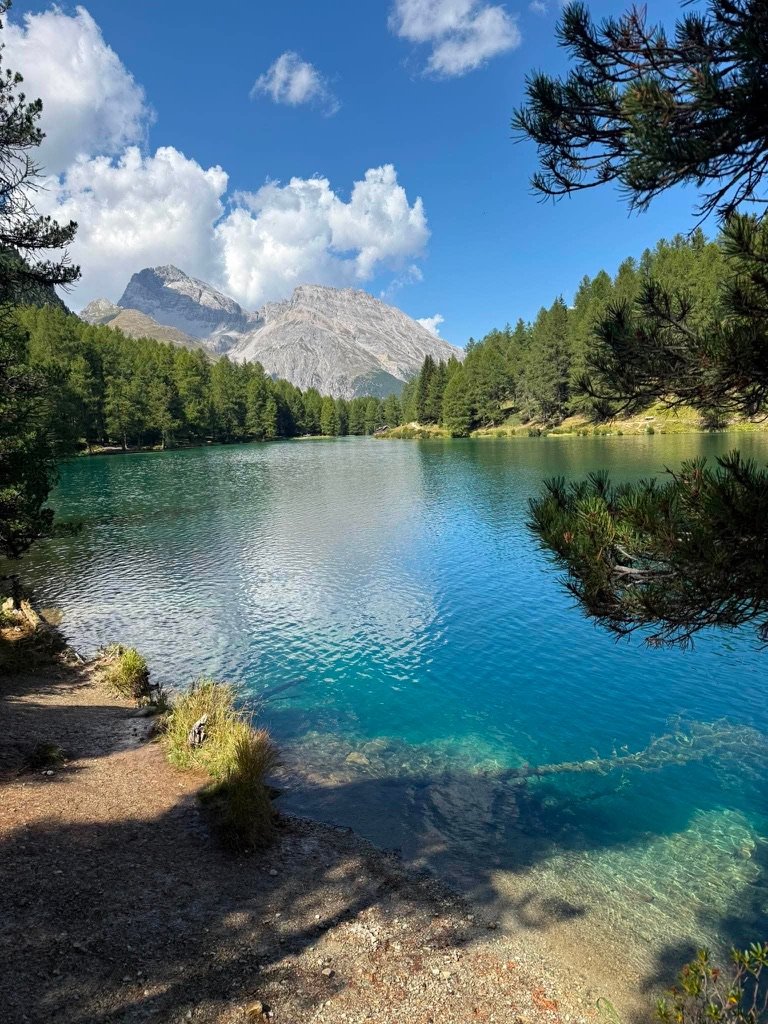
I’d also joined a group that took a detour to a mountain lake for a quick swim.
Absolutely worth it, but possibly not my wisest energy-management decision.
Toward the end of the climb, I was spent. I hadn’t eaten enough. I was out of water. The altitude was making it difficult to catch my breath. One of the other hikers had stayed with me, trying to distract and encourage me.
Eventually, I called out to my husband, who was a little farther up the trail, and asked him to come back.
I could see the hut. It was maybe 50 yards farther up the mountain. It may as well have been a mile.
I couldn’t get there.
My husband gave me water, took my pack, and helped me make that last push.
My Secret Cheerleader was there too, patiently encouraging me.
I was just too exhausted at the time to notice.
The third day was our biggest.
Almost 10 miles (16 km). A nearly 3,000-foot (900 m) descent followed by a nearly 3,000-foot ascent to the peak, with several more miles still to go before reaching our hut.
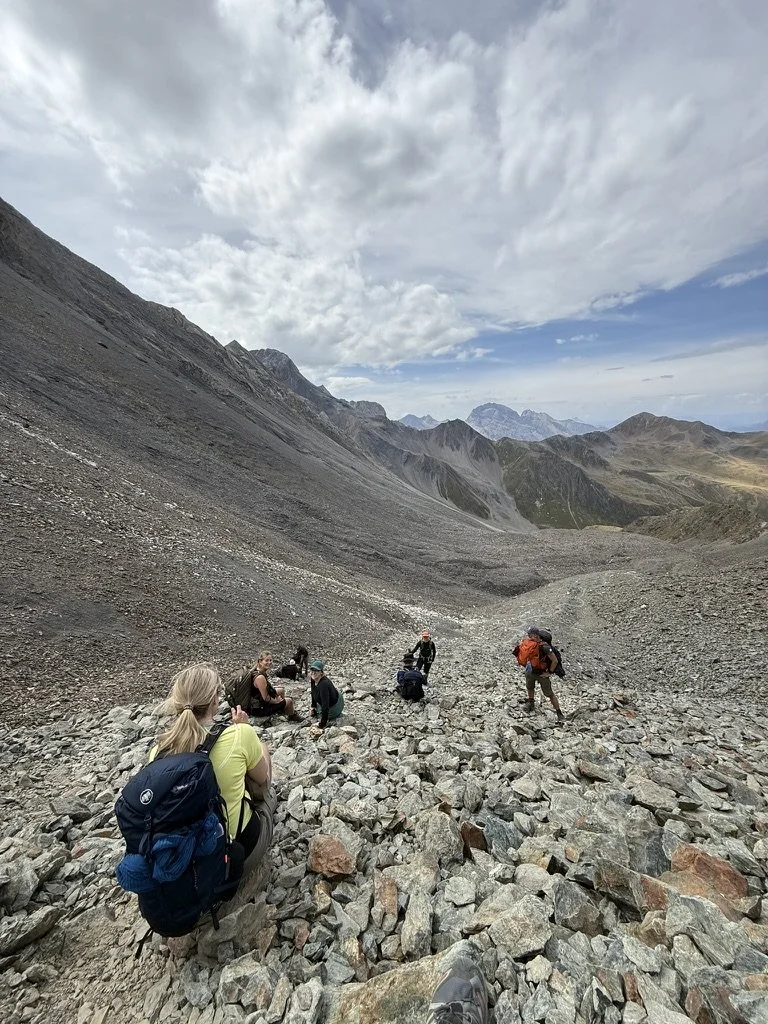
The climb was tough.
My brother-in-law could see me struggling as we climbed toward the summit and insisted on taking my pack for part of the climb.
Later, my husband took over. Then my other brother-in-law stepped in.
At one point, my husband’s oldest brother noticed how I was climbing.
I was taking big steps up the mountain, planting my poles and pushing hard.
“Take small steps, Briana. Take small steps.”
He explained that I’d conserve energy and control my breathing better.
So I changed my stride.
Smaller step. Smaller step. Smaller step.
And almost immediately, the mountain felt different.
I could breathe better. I wasn’t burning through quite as much energy. I stopped trying to conquer the stretch in front of me and concentrated on taking the next small step.
Eventually, I reached the top.
Later, I saw my former colleague running low on energy as she pushed toward the peak and passed along the same advice I’d been given.
Take small steps.
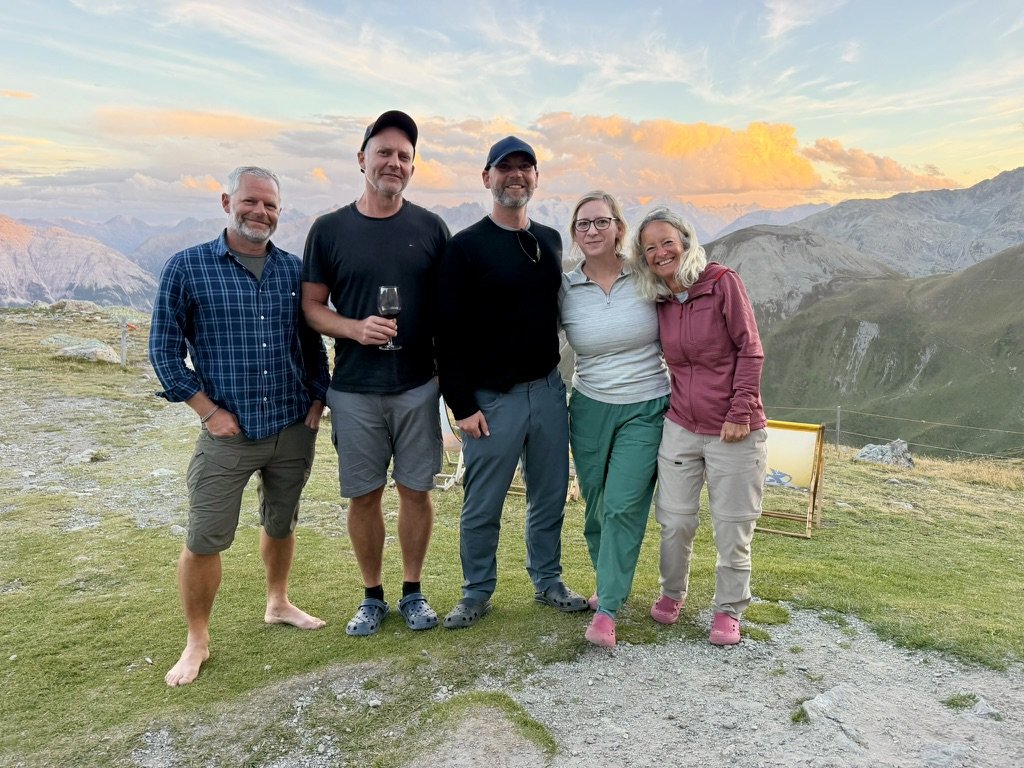
Here I am with my husband, his two brothers, and our sister in-law. Truly grateful for all of their support throughout this trip!
Throughout the trip, I’d been asking everyone to jot down a few words about our experience, collecting their responses with the idea that I’d eventually turn them into a creative keepsake from our trip.
On our final morning, I gave the group a final prompt:
What do you want to remember about this trip five years from now?
The answers weren’t about the distance we’d covered or how high we’d climbed.
They wrote about a community of care and curiosity.
The “loud” silence and the sound of breathing while climbing the mountain.
Lovely people. Laughter. Songs. Beautiful nature. Mental battles.
One step at a time up the mountain.
And this:
We were good at supporting each other when things were tough.
I’ve thought about that quite a bit since coming home.
Not only the advice to take small steps, although I’ve carried that with me too.
I’ve thought about why this particular group came together as well as it did.
Nineteen people. Different ages, personalities, fitness levels, and expectations. Some knew one another well. Others barely knew each other at all.
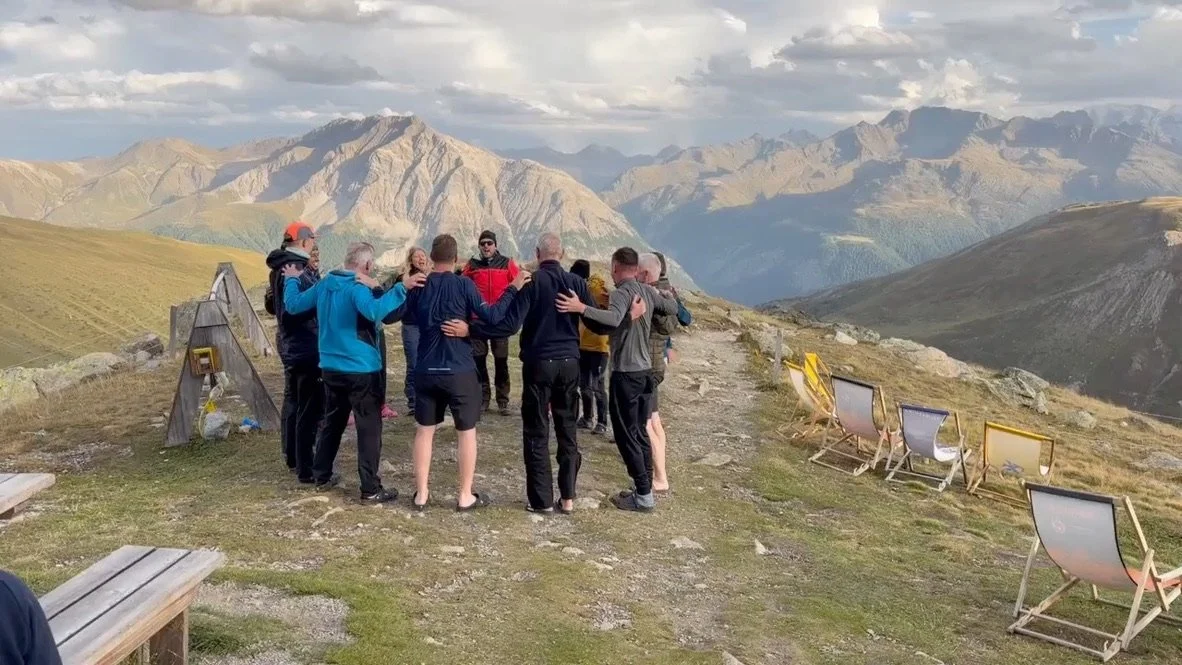
And yet, somewhere along the way, we became a team.
There was no culture program happening on that mountain. No one assigned roles for who should notice when someone was struggling, carry a pack, offer water, wait behind, or make everyone laugh when we needed it.
People noticed. And they responded.
The Secret Cheerleader may have started as an experiment, but by the end, encouragement belonged to everyone.
I’ve spent much of my career thinking about what allows groups of people to do difficult things together—and what helps people bring their best when the work itself is challenging.
At work, we spend a lot of time on the bigger pieces: strategy, structure, roles, goals, processes. They matter.
But so much of how work actually gets done happens in the smaller moments between people.
Someone notices that a colleague is struggling and steps in without taking over.
Someone asks for help.
Someone accepts it when it’s offered. I struggled with that one on the mountain.
Someone shares what they’ve learned so the person behind them has an easier path.
People understand where they’re going, but they don’t all have to get there in exactly the same way.
Over time, those small moments create something bigger: trust, connection, shared responsibility, and a sense that we’re in this together.
Those are some of the conditions reflected in the Five Hygge Culture Anchors—not as a program to roll out, but as a way of paying attention to what helps people work well together and bring their best to something they are trying to accomplish.
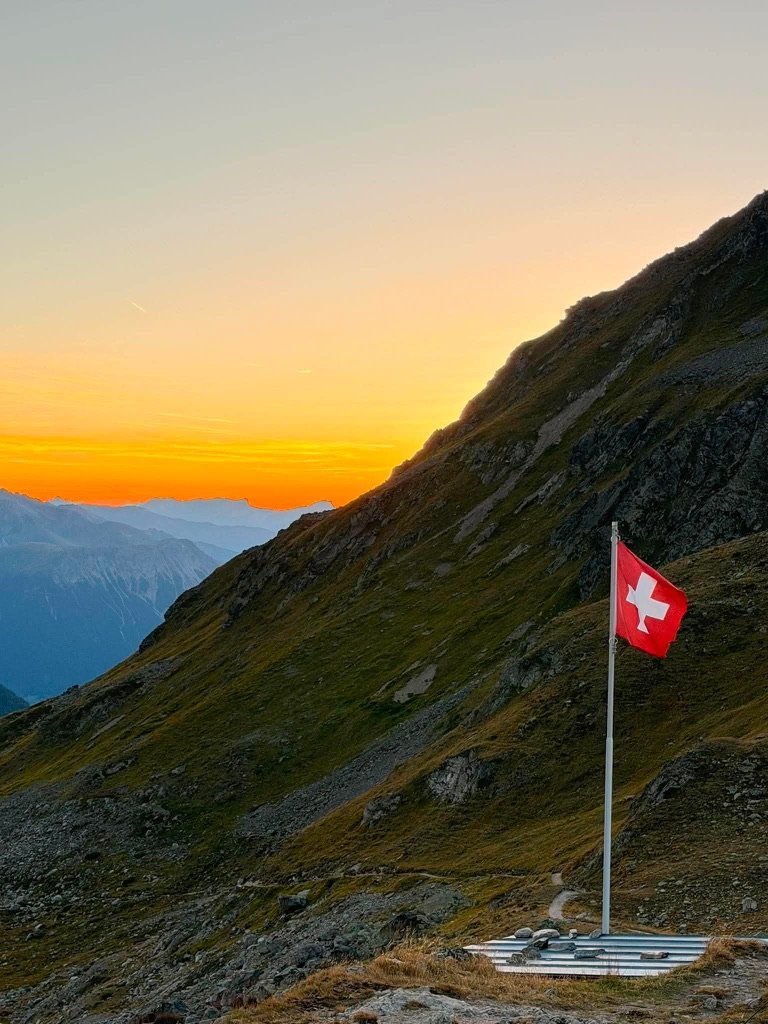
We accomplished what we’d set out to do in Switzerland.
But when I asked what everyone wanted to remember five years from now, very few of the answers were about the accomplishment itself.
They remembered how we got there.
The support. The laughter. The people. The mental battles. The silence. The small steps.
The mountain didn’t get any smaller when I changed my stride.
The climb didn’t become easy when someone took my pack.
But I could breathe again. I had enough energy for the next step.
And together, we kept moving.
Sometimes you need to take a smaller step. Sometimes you need to carry someone else’s pack. And sometimes you need to let someone carry yours.
Somewhere high in the Swiss mountains with 18 Danes and one very tired American, that felt pretty positively hygge.